My dad killed himself today. He hanged himself in the morning.
We may enjoy our room in the tower, with the painted walls and the commodious
bookcases, but down in the garden there is a man digging who buried his father
this morning, and it is he and his like who live the real life and speak the
real language.—Virginia Woolf
My dad killed himself today. He hanged himself in the morning. I'm not sure what
to say, what to feel, what to write, or if writing anything is appropriate or
useful in the first place. In any case, he is gone now. And what is left are
questions and memories, but mostly questions.
When I first heard the news I wasn't even surprised. And yet I broke down. And
cried, and was angry. And sad. And everything in between. I cried for two hours
straight, and many hours after that. I'm still crying most days, and I doubt
that the sadness will ever go away. I was and am devastated. Not because of him
dying, but because of him killing himself.
He was a good man. Imperfect, like all of us are, but with a good heart. He had
a good mind too, and I'm afraid said mind is what killed him.
Think of the old cliché about “the mind being an excellent servant but a
terrible master.” This, like many clichés, so lame and unexciting on the
surface, actually expresses a great and terrible truth. It is not the least bit
coincidental that adults who commit suicide with firearms almost always shoot
themselves in: the head. They shoot the terrible master.—David Foster Wallace[^fn-alone]
[^fn-alone]: "And the truth is that most of these suicides are actually dead long before they pull the trigger. And I submit that this is what the real, no bullshit value of your liberal arts education is supposed to be about: how to keep from going through your comfortable, prosperous, respectable adult life dead, unconscious, a slave to your head and to your natural default setting of being uniquely, completely, imperially alone day in and day out."
I'm trying my best not to judge or blame my father. I am well aware of the
terrible master that is the mind, and am all too familiar with the bottomless
pit that is despair and depression. Losing all hope, losing all sense of
meaning. Losing the ability to feel or experience joy, or any positive emotion
for that matter. A week of this will turn anyone suicidal; a year or two and
it's a miracle if you're still alive.
And yet it is hard not to judge. Borderline impossible to accept his decision;
to accept things as they are now.
The so-called ‘psychotically depressed’ person who tries to kill herself
doesn’t do so out of quote ‘hopelessness’ or any abstract conviction that life’s
assets and debits do not square. And surely not because death seems suddenly
appealing. The person in whom Its invisible agony reaches a certain unendurable
level will kill herself the same way a trapped person will eventually jump from
the window of a burning high-rise. Make no mistake about people who leap from
burning windows. Their terror of falling from a great height is still just as
great as it would be for you or me standing speculatively at the same window
just checking out the view; i.e. the fear of falling remains a constant. The
variable here is the other terror, the fire’s flames: when the flames get close
enough, falling to death becomes the slightly less terrible of two terrors. It’s
not desiring the fall; it’s terror of the flames. And yet nobody down on the
sidewalk, looking up and yelling ‘Don’t!’ and ‘Hang on!’, can understand the
jump. Not really. You’d have to have personally been trapped and felt flames to
really understand a terror way beyond falling.—David Foster Wallace
Invisible Agony#
I guess we'll never know what went through his head on the day of his death.
What invisible agony tormented him. What kind of terror made him jump, what kind
of flames were scorching his flesh. He left no suicide note; no last words; no
explanation. No paragraphs that might provide insight or closure. What we do
know is that it wasn't a snap decision, as he went through the trouble of
driving to another city to leave the family dog at a safe place. And after this
small act of kindness, he drove back to put his neck through the noose.
It's hard to put into words what kind of devastation lies in the wake of a
suicide. Psychologically speaking we can deal with natural disasters like
hurricanes and earthquakes, or straight-up accidents that can and do happen,
especially if there is no one to blame. That's the crux of the matter, isn't it:
blame.
We want to blame someone, and we're unsure whom to blame. We might want to blame
the hand that killed the person—until we realize that we can't blame killer and
victim at the same time; and blaming the dead is futile anyway. Thus what is
left but to blame ourselves?
So we start the agonizing process of asking ourselves the question of what
if... What if our relationship would've been better? What if I had called more
often? What if I would've known about his financial troubles? What if I would've
talked to him about my own guilt and existential angst, and what helped me
through my darkest times? What if?
I'm sure that everyone close to him is asking themselves these and similar
questions, along with the eternal one that is: Why?
Why kill yourself when you have so many things to live for? Why leave five kids
without a father, especially if two of them aren't adults yet? Why kill the
grandfather of your 6 grandkids, one of which you haven't even met? Why, why,
why? And here it is again: the passing of blame.
I understand people who kill themselves, strangely enough. I think anyone who
has personally been trapped and felt the flames does, as David Foster Wallace so
beautifully put it. But it's hard to fully accept suicide if it's that close to
home.
That's the issue, I think. The suicide of my father cuts very close to the bone.
My father is part of me and I am partly him. I'm not too different from him, in
fact. He was extreme in his approaches; I am too. He didn't care much for
material wealth or money; just like me. He was no stranger to depression; just
like me. He was a perfectionist, and I am too. He was fearless and often times
reckless, and I guess I can be all of that as well.
I have my father's mind and temperament, and I fight with it every day. I fight
the monster that is the terrible master as best as I know how, trying to keep
things at bay with sheer discipline and willpower.[^fn-willpower] I know that he
managed to do the same for many decades, but in the end the monster won. Or did
it?
[^fn-willpower]: I am aware of the irony; the mind trying to keep the mind at bay. I am trying my best to "make the leap into the heart" - I'm trying my best...
Did my father struggle with depression, or did depression struggle with him? Did
the monster kill my father, or did he kill it? Norm Macdonald once quipped that
people don't lose their battle with cancer; if anything, it's a draw, because if
the person dies the cancer dies too.[^fn-norm] It's all the more poignant because it was
cancer that killed him, the very cancer that he was already aware of when he
made said quip.
[^fn-norm]: "That’s not a loss. That’s a draw!" —Norm Macdonald
When it comes to cancer, especially late-stage cancer so advanced in its
progression that all hope for betterment and remission is surely lost, most of
us agree that prolonged and unnecessary suffering is inhumane. We allow people
to die. In some cases we even allow them to actively kill themselves, even
assist them in doing so. We call anxiety and depression the "cancer of the
mind," and rightfully pose comparative questions to try to make sense of it all.
Questions such as:
"If I had cancer, would you force me to live out the rest of my days in pain or
would you help me find rest?"[^fn-yt]
[^fn-yt]: Izzy Pfutzenreuter posed this question in a YouTube comment under this video, after stating the following: "I’ve been in therapy for years, both with a psychiatrist and a clinical psychologist. I still don’t see a future for myself. I’m tired, I’m bankrupt, I can’t live normally and I just can’t get myself interested in anything these days."
But depression isn't cancer, which is why we don't consider suicide a natural
death. We don't help people to kill themselves when they are depressed—we try to
help them get better. We try to help them get rid of the monster that is the
terrible master, by any other means but death. And sometimes we fail. Often,
really.
I keep asking myself this question: When it comes to suicide, does the terrible
master shoot the person, or does the person shoot the terrible master? Does one
win over the other, or is it a draw?
Whatever the case may be, the monster that killed my father is alive in me. It
lives on in me; in my mind, in my conscious and subconscious. I don't intend to
feed it, but it is there nonetheless. And I'm afraid it will always be there.
There are two things we know for sure about suicide: it is neither rare nor
simple. More people die of suicide than of homicide and natural disaster
combined.[^fn-stats] There are no simple answers, no simple explanations, no simple way of
making sense of it. Reasoning stops, and with it, the heart stops too. That's
the whole point of killing oneself, and the conundrum of it all. The suicidal
person tries to stop her mind from tormenting her being, and in the process
stops her heart. But who exactly killed whom?
[^fn-stats]: I learned this from Dr. David Goldbloom, who made me look up the number of people that kill themselves as well as the number of people that are killed by others. Both statistics are sad, but the fact that the number of suicides is so much higher was surprising to me. We seem to be living in relatively peaceful times when it comes to the external world, but when it comes to the internal world... not so much. I mean... suicide is the biggest killer of men under 45. That stat alone should give you pause.
It's precisely this paradoxical nature of suicide why we often speak of
depression as a disease, as something that can and must be cured, like the flu
or a headache or a viral infection—or cancer, as alluded to before. It's easier
that way; because it allows us to say that depression is the killer. An external
agent, a disease that we don't have much control over. We move the killer from a
"who" to a "what." But where does it stop? And where does the person end and the
monster start? What is circumstance, and what is agency? How much say do we have
over what we think, what we do, and what we feel? How much agency can we exert
when it comes to constructing meaning from experience, to say it in David Foster
Wallace's words? How much control do we have over our thoughts?
How frail the human heart must be—a mirrored pool of thought.
—Sylvia Plath
During the financial crisis of 2008, suicide rates increased by roughly 5% in
Europe and America.[^fn-0] More men killed themselves than women, as they always
do.[^fn-1] Who killed those men? What killed those men? Are they responsible for
their suicide? Did they truly kill themselves, or did the financial crisis kill
them? Was it depression? And if it was depression, was it the psychological one
or the economic one? Is there even a difference?
[^fn-0]: "In the recent Global Financial Crisis (GFC) of 2008, suicide rates increased by 4.2% in 27 European countries and by 6.4% in 18 American countries, with more marked increases noted for men."
[^fn-1]: "The suicide rate among males in 2022 was approximately four times higher than the rate among females. Males make up 50% of the population but nearly 80% of suicides."
Questions over questions... The reason why we assign blame in the first place is
because of our steadfast conviction that it could've been different. We believe
that there is a scenario where the person could still be alive—if only this or
that would've happened instead. If only we would've known. We would've helped;
we would've intervened. If only...
Blame#
Blame and agency are intimately intertwined, of course. That's why we
differentiate between premeditated assassination, manslaughter, the death
penalty, and murder in the heat of the moment. We lack such differentiation for
suicide. The person is dead, and some other, bigger force, won.
That's precisely it, isn't it. We aren't a uniform blob; we aren't even one
person. There are forces at play, most of which we don't understand very well.
Some of them live inside of us, some shape us from the outside. We have stories
about these forces; we call them Love and Hate; God and the Devil; Happiness and
Depression; Good and Evil. "These forces," to quote David Mitchell, "begin long
before we are born, and continue after we perish."
The paradoxical nature of suicide makes this abundantly clear. There's a part of
you that doesn't want to live anymore; there's a part of you that is suffering.
But there's a part of you that doesn't want to die, that is afraid of death; a
part that is contemplating, that is afraid to jump, that wants to get better. A
part that is glad that someone stopped you, that someone talked you off the
ledge. A part of you that is open to being talked off the ledge in the first
place. There are forces inside you that pull you in one direction and others
that pull you away from it; away from the abyss. The suicidal mind is possessed
by the angel of death, a force that goes against life itself. But your heart is
immune to this possessive force; the heart can't make the heart stop beating.
The heart can't stop itself. Only the mind can stop itself.
Our hearts and minds are shaped by forces, internal and external—visible and
invisible. The story of history is the story of the mind trying to understand
these forces. And one might say that the story art is the story of the heart
trying to understand these forces.[^fn-myth]
[^fn-myth]: And some would say that the story of myth and religion is the story of civilizations trying to understand these forces, and I would agree.
We used to call them spirits. And we still use this word today, i.e. when
talking about the spirit of a team, the elusive force that makes the members of
a group want said group to succeed. Life itself has such an elusive force. We
call it "Lebensfreude." Joie de vivre, a zest for life. An inherent
willingness to live.
Life is life-affirming, and it has to be. If it wouldn't be, it would
self-destruct. Is it any wonder then, that most religious thought came to the
conclusion that suicide is against the spirit of God, the creator, the eternal
life force itself?
Most religious thought answers the fundamental question of life, "to be or not
to be," in the affirmative. God created the heavens and the earth, and all
creatures, and light and darkness, and women and men. And it was good. Very
good, even.
Every day above earth is a good day.
—Ernest Hemingway
Suffering#
Angel on the left shoulder, devil on the right. "Jump!" shouts the devil.
"Please, reconsider," whispers the angel. "It might not feel like it right now,
but you will be deeply missed—and you will get better." Who do you listen to? Do
you even have a choice? Can you decide to pay attention to the one, but not the
other?
Again, the religious answer is a definitive yes. Yes, you have a say in the
matter. Yes, you can decide to orient towards the Good, the True, and the
Beautiful. Yes, you have Free Will. Not your mind, not your heart, but you
yourself, the True Self that is behind it all; the higher self. The eternal
self.
I never was a religious person, and I'm not sure if my father was either. He
grew up in a religious household and went to church from time to time, but I
doubt that he took religious teachings seriously. I do now.
I do now because religious thought is not optional, and neither is religious
orientation. An orientation towards the Goodness of Life; towards the Beauty of
Being itself. In his commencement speech, David
Foster Wallace mentions that "the only thing that’s capital-T True is that you
get to decide how you’re gonna try to see it." I now believe that this is true
for suffering as well. You can decide to see it as suffering, or you can decide
to see it as Grace.
Meaning and suffering are intertwined, and both are axiomatic for existence.
"Can't derive an ought from an is" and all that jazz, with some "cogito, ergo
sum" mixed in. There is no experiencing without meaning; no acting without
suffering. To exist as a self-conscious, experiencing, acting agent in this
world you have to believe that your existence and existence itself is
meaningful, that existence is preferable to non-existence. If you do not believe
that, you will unavoidably kill yourself and others. That's the cold-hearted
logic of it all.
But the universe isn't cold-hearted, because we are part of it. And we care.
About the living, and the dead. About our own lives and the lives of others.
About life itself. About what it means to experience it, good and bad.
To be positive at all times is to ignore all that is important, sacred or
valuable. To be negative at all times is to be threatened by ridiculousness and
instant discredibility.—Kurt Cobain
Positive and negative. Yin and Yang. The sacred and the profane. That's what
life is, an amalgamation of seemingly paradoxical opposites. We push the boulder
up the hill so it might roll down again. Rinse and repeat, for all eternity.
Albert Camus understood that the question of "why" is THE fundamental
question. Shakespeare did too, obviously. Why do anything at all? Why keep on
living? Why be, if you could also not be?
According to Camus, there is but one truly serious philosophical problem and
that is suicide. "Judging whether life is or is not worth living amounts to
answering the fundamental question of philosophy." I think that Viktor Frankl
would agree.
I was always bothered by the English translation of Viktor Frankl's book. The
German title is not "Man's search for meaning"—far from it. It's "Say Yes to
Life Anyway" ("… trotzdem Ja zum Leben sagen"). It's an ode to the right
psychological stance to life, which is the religious stance: say YES to Life,
despite of your suffering. Say YES to existence, despite of the injustices and
horrors and the malevolence of this world. Say YES to it all, even if you
think it's moot and meaningless and stupid and terrible. Say Yes, no matter the
situation. Even if you're imprisoned in a Nazi concentration camp. Say yes to
Life. Say yes to being. Say yes, and be.
"To be or not to be" is so obviously the fundamental question to be asked, and I
believe that is why suicide is so brutal, so destructive to the living, so
devastating to those that still are. Because suicide is an answer to this
question. The act itself is an affront to being itself, and an attack on the
axiomatic worldview that is shared by the living. It is a deliberate assault on
the one thing we all share: conscious experience, the qualia of what it means to
be.
Courage#
If someone throws themselves on a hand grenade to save others from the impending
doom of the inevitable explosion, we applaud them and give them the highest
honors, even though they technically killed themselves. Why don't we do the same
for someone who takes action to save himself from impending doom?
I believe the answer lies in our intuitive analysis of who killed whom. In the
case of the hand grenade, the Higher Self decides to sacrifice the body to save
others. The man who throws himself on a hand grenade doesn't kill anyone else.
His spirit is very much intact. In the case of suicide, the tormented mind
chooses to kill mind and Self alike, to end the suffering of both. The man who
kills himself, kills his Self. His spirit is broken. "It is murder and a corpse
is left behind, no matter who has killed whom," is what Jung had to say on the
matter. "The man who kills a man, kills a man," wrote Chesterton. "The man who
kills himself, kills all men. As far as he is concerned he wipes out the world."
That's why dealing with suicide is so hurtful. Desperation, hopelessness,
homicide, and genocide—all mixed into one.
Paul Tillich tells us that "all things are rooted in a yes and a no,"
including being itself. That's why faith and hope are paramount—and faith and
hope are indistinguishable from courage. The Courage To Be, in other words, is
the courage to say YES to the fundamental question of being, and with it open
up to the process of becoming—suffering and all.
Suicide ends the process of becoming, and while it kills the tormented mind that
is the terrible master of the suicidal, it kills the heart too, with all its
openness, and Love, and potential. Suicide kills the future. And with it the
hope that things could be better. It is an absolutist act, implicitly claiming
final knowledge of what is yet to come. I know what's ahead—I know what Life /
God / the universe has in store for me—and I know that it's not worth the
trouble. Suicide claims that striving towards betterment is not worth it; the
struggle is not worth it; life itself is not worth it, which leaves those who
are still living in a conundrum: What if they're right?
What if they're right?#
What if those who kill themselves are right? Maybe life isn't worth living after
all. Maybe the struggle isn't worth it. Maybe it is all meaningless, senseless,
and—in the final analysis—futile. Maybe the whole Spiel is not worth the
trouble. Maybe it's better to end it all; to end the suffering.
Suffering. That's what the question of suicide boils down to; and the question
of life and being and existence for that matter, which are the questions of the
religious domain.
The essence of religious thought is that you can't escape it, only transcend it.
You can not and must not escape into Nirvana. The Western tradition teaches you
to embrace it fully and with an open heart. And by embracing your suffering, and
by carrying your cross wilfully and with grace, your burden will lose its
weight.
The Eastern tradition encourages you to detach from your desires so completely,
and live in the eternal now so fully, that the gap between what is and what you
think should be closes, and with that your suffering fades. After all, it is
this gap—the gap between ought and is—that creates our suffering. And
paradoxically, or maybe obviously, this gap needs to exist for any acting agent.
This is why Life is suffering, and suffering is unavoidable.
Religions figured all this out a long time ago, and they all came to the same
conclusion: don't try to escape it. Every attempt to escape it is misguided.
Being is intrinsically good. Life is intrinsically good. God is great, and
trying to escape the suffering that is being is wrong. It is intrinsically
wrong. Even if the suffering is unbearable; even if it is maximally painful.
Spiritual growth is learning how to bear the unbearable; and do so sincerely,
from the heart.
If only we try to live sincerely, it will go well with us, even though we
are certain to experience real sorrow, and great disappointments, and also will
probably commit great faults and do wrong things, but it certainly is true, that
it is better to be high-spirited, even though one makes more mistakes, than to
be narrow-minded and all too prudent. It is good to love many things, for
therein lies the true strength, and whosoever loves much performs much, and can
accomplish much, and what is done in love, is well done.—Vincent van Gogh
Love#
Love is the answer. Not reason, not logic, but Love. Love for yourself,
love for others, and love for being itself. True, unconditional Love. If you
love someone unconditionally you accept them as they are; if you love the
underlying ground of being unconditionally, you accept things as they
are—including yourself. Loving fully implies forgiving fully, and that's the
hardest thing of them all. Forgiving others. Forgiving God. Forgiving yourself.
The thing that matters are others.
Erlich Fromm tells us that "the right self-love and the love of others are
interdependent". I believe that this is true for the right love of being itself
as well. Maybe that's what the Trinity represents. A loving relationship to
yourself as the son, to your father that brought you into this world, and to the
transcendental that is between all things. The holy ghost, the spirit of
existence itself. My heart tells me that all of that is true; my oh-so-skeptical
and oh-so-reasonable mind has trouble accepting such lofty propositions.
"Man shall not live on bread alone," according to Jesus, "but by every word that
proceedeth out of the mouth of God." One could even argue that man can not
live on bread alone, because man would starve spiritually due to the lack of a
transcendental guiding principle, and thus eventually kill himself. I think
that's what Nietzsche meant when he said that life without music would be a
mistake. We need to be reminded of the transcendental beauty of things—no, of
existence itself—and music is the most powerful and penetrating reminder we
have.
That's why music isn't optional; and art isn't optional; and beauty itself isn't
optional. That's why "beauty shall save the world," as Solzhenitsyn so boldly
claimed. I understand that now.
How many times have people used a pen or paintbrush because they couldn't
pull the trigger?—Virginia Woolf
But understanding all that might not be enough. Picking up a pen, paintbrush,
violin, guitar—or whatever you use to create something beautiful—might not be
enough. The just quoted Virginia Woolf wrote many beautiful things, and yet she
eventually killed herself.[^fn-woolf] As did Sylvia Plath, and Vincent Van Gogh.
Kurt Cobain and Robin Williams killed themselves too, most famously. And
Hemingway as well, by shooting himself in—you guessed it—the head. Even David
Foster Wallace, who so poignantly talked about the old cliché of “the mind being
an excellent servant but a terrible master,” the same David Foster Wallace who
so vividly painted the picture of a burning high-rise with you being trapped at
the window—that very David Foster Wallace who gave one of the greatest
commencement speeches of all time—killed himself. He hanged himself, just like
my father did.
[^fn-woolf]: Even her suicide note is beautifully written.
Reasons#
It's easy to reason yourself into suicide, especially if you are depressed. The
world is terrible, your life is terrible, other people are terrible, and to top
it all off you yourself are terrible too. Why keep on living? The problem with
this line of reasoning is that it comes from the mind, not the heart. In Jung's
words, if you are ever suicidal you should "be sure first, whether it is really
the will of God to kill yourself or merely your reason." Because "the latter is
positively not good enough."
There is a reason why we say "follow your heart" and not "follow your mind" when
we are having a hard time making a big decision. Even in today's day and age—an
age dominated by reason and logic; an age that is drowning in mind and starving
for heart—we encourage others to listen to their gut feeling, to do the thing
that they know in their heart is right, even if "objectively" and "rationally"
one can find a million reasons why it might be "wrong" by any rational measure.
Why do we do this?
We do this because we intuitively know what David Foster Wallace so beautifully
explicated. We deeply understand the old cliché, that the mind is an excellent
servant but a terrible master. I think that's why religions put so much emphasis
on grace, forgiveness, humility, and Love. All these things put heart first,
mind second. Our society has this backward, which is at least partly responsible
for the suicide epidemic, I believe. We over-emphasize mind and under-emphasize
heart, creating terrible masters and monsters alike. "Almost nobody shoots
themselves in the heart," to rephrase David's remark. After all, the monsters we
fight are usually in our heads, and not elsewhere. A heart might be longing or
cold or confused or broken, but it isn't a house for demons and monsters. It is
obvious to me that those who decide to kill themselves don't follow their heart;
they do the opposite. They follow the terrible master to the ultimate
conclusion, are convinced that he is right, and he is convinced that ending it
all is the right thing to do.
The suicidally depressed don't think of it this way, of course. All they want to
do is put an end to their suffering. They believe that their suicide is
justified, and maybe in some cases, it is.
But who can decide such a thing with any resemblance of authority? Who but that
which we call God? What mortal soul has the audacity to define the threshold
that puts a person into the "category of people that have permission to kill
themselves?"[^fn-bridge] How much suffering is too much suffering?
[^fn-bridge]: Quote from The Bridge, a 2006 documentary film spanning one year of filming at the Golden Gate Bridge, which is the world's most popular suicide destination.
Maybe that's why religions are so absolutist when it comes to suicide. It's a
threshold problem, just like the problem of free speech. What pain is
unbearable, and by what measure? And what if the thing that is responsible for
said measurement is faulty? What if your "suffering sensor" is broken?
Pain#
"It's beautiful when the pain subsides," is something my father used to say a
lot. Every time he was doing sports or something else that would bring him to
his physical limits—bones hurting, muscles cramping—that one line was his go-to
rationalization to keep going, to push even harder. It doesn't matter if you're
hurting now; just imagine how amazing it will feel once the pain goes away. I
hope it did, Dad. I hope your pain went away in the end. I hope you're feeling
the bliss that you were always after.
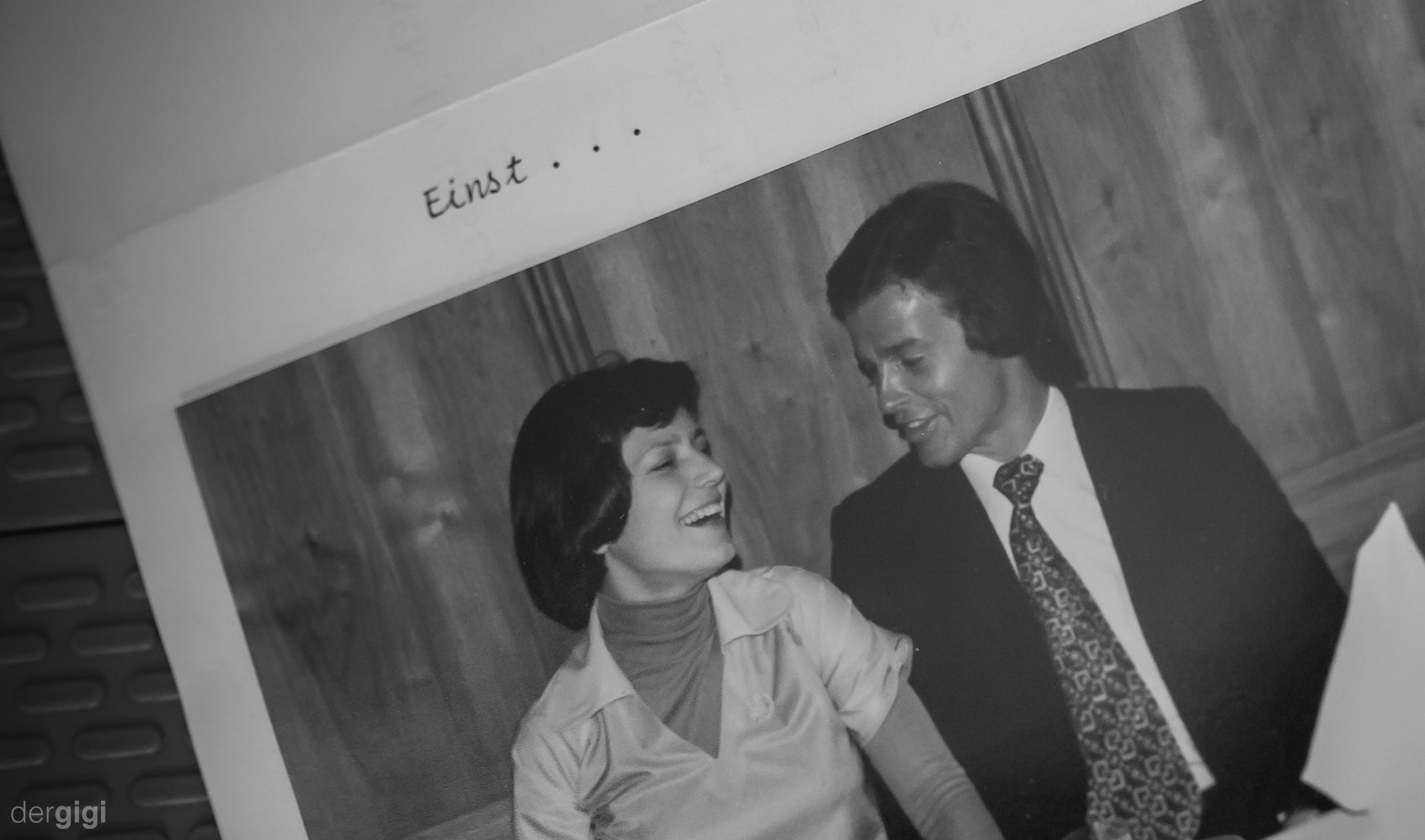
My father killed himself on October 15, 2024. He hanged himself in the morning.
He left behind his wife, my mother, five children, six grandchildren, two
brothers, and a dog. I'm not sure what to say, what to feel, what to do, or what
to think. I'm not sure if it was the terrible master that ended him, or if it
was my father ending the terrible master, forcing a draw. There was a battle,
and it's hard to say who won and who lost. In any case, he is gone now. I'm left
with sadness, questions, and wishes.
I wish he could've met my daughter. I wish he could've known how much I loved
him. I wish I could've had the chance to talk to him one last time. I wish I
could've told him that he was a good dad. No, a great one. I wish we could've
had a proper conversation. Not only son to father, but father to father, soul to
soul, and tormented mind to tormented mind. I think I could've helped him. I
wish he could've known that I was there too, in the burning building up top,
about to leap out of the window. I wish I could've told him that the flames
might be an illusion; that there is a chance they eventually
subside.[^fn-gravity] I wish I could've told him that there is hope; that
there's a path to feeling better.
[^fn-gravity]: Gravity isn't; the concrete floor won't.
It pains me to know that my father was in such torment that he decided to end it
all. I didn't know. Not really.
Peterson once said, "If there are people around you that love you, it's pretty
likely that they will never really recover [from your suicide]."[^fn-lobsterson]
I loved my father, imperfect as he was. I wouldn't be here without him, and I
wouldn't be the person I am today without his guidance, teachings, and love.
Call your parents. Even if your relationship is complicated. Even if you haven't
spoken for a long time. Even if they are far away. Call them, and tell them that
you love them. They might need to hear it. More than you can imagine.
I love you dad. I miss you dearly. May you rest in peace.
If you are considering suicide or self harm, please get help now.
[^fn-lobsterson]: "You don't have to carry the weight of despair alone." - A message to someone with suicidal thoughts.

Gigi
Not doing DMs. Aspiring Saunameister.
dergigi.com