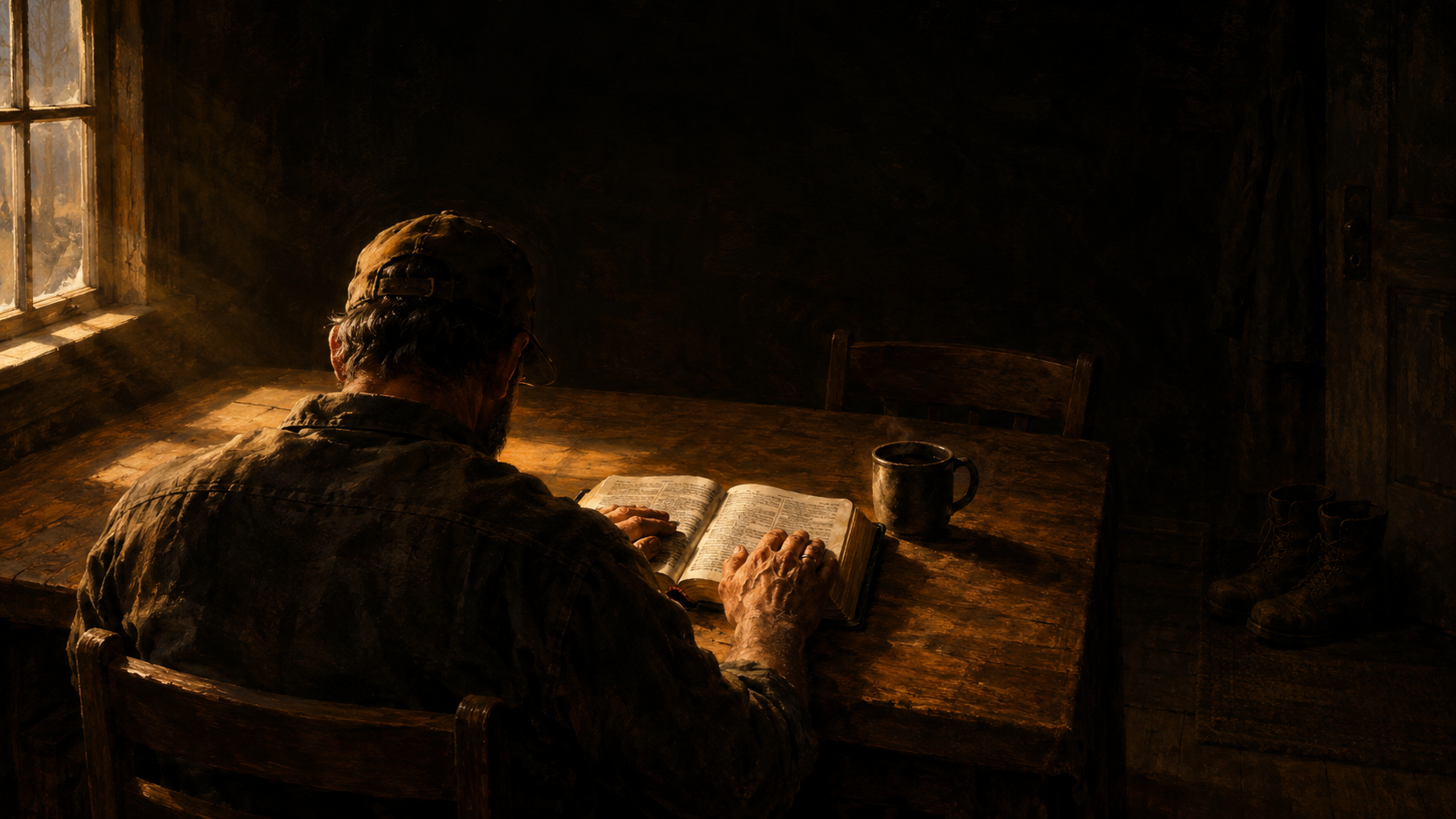
The Christian Man: A Reformed Rule of Life for Husbands, Fathers, Workers, and Men Under Christ
Every man fears something. The question is whom he fears most. Chapter 2 of The Christian Man.
Chapter 2
There is a difference between knowing that God exists and living before God. A man may affirm the sovereignty of God, sing about His holiness, attend church every Lord’s Day, and still make his decisions as though the decisive question were what other people will think of him. He may know the right doctrine and yet live by the approval of his employer, the expectations of his friends, the desires of his wife, the praise of his children, or the judgments of strangers. His theology may be orthodox while his instincts are governed by another master.
Scripture gives a name to the posture that brings the whole man back into proper order: the fear of the Lord. “The fear of the LORD is the beginning of knowledge” (Prov. 1:7). It is not an advanced subject reserved for unusually devout Christians. It is where wisdom begins. A man who does not fear God does not merely have a deficiency in his religious life. He has misunderstood reality.
The fear of the Lord begins with God Himself. He is the Creator; we are creatures. He is holy; we are sinners. He is King; we are subjects. He is Judge; we are accountable. Yet for the man who is in Christ, this same God is also Father. The gospel does not remove God’s holiness or make Him less worthy of reverence. It gives the sinner peace with the holy God through the righteousness of Christ. That is why the fear of God is not the same thing as living in terror of Him.
The Christian does not run from God as Adam ran into the garden. He runs to God through Christ. But he does so with reverence. Grace does not make God smaller. It teaches us to see His greatness without being destroyed by it.
God Is Not Like Us#
One of the great problems of modern Christianity is that we are often more comfortable with a God we have reduced to manageable proportions. We speak about God’s love, kindness, forgiveness, and nearness—and all of those things are gloriously true. But if those attributes are detached from His holiness, majesty, righteousness, and authority, we eventually cease speaking about the God of Scripture.
The Lord said to Moses, “You cannot see my face, for man shall not see me and live” (Ex. 33:20). When Isaiah saw the Lord high and lifted up, the angels cried, “Holy, holy, holy is the LORD of hosts” (Isa. 6:3). Isaiah did not respond by congratulating himself on having received a more intimate spiritual experience. He said, “Woe is me! For I am lost” (Isa. 6:5). Peter had a similar response when he recognized who Jesus was. After the miraculous catch of fish, he fell at Jesus’ knees and said, “Depart from me, for I am a sinful man, O Lord” (Luke 5:8).
The presence of God exposes our smallness. This is not because God is insecure or cruel. It is because He is God. We need this correction because modern man is accustomed to thinking of himself as the reference point for nearly everything. We ask whether something feels authentic, whether it satisfies us, whether it advances our interests, whether it fits our preferences, whether it makes us happy. Even religion can be evaluated according to what it does for us.
The fear of the Lord reverses the direction of the question. The issue is no longer first, What do I want? It is, What is true before God? That question reaches into every part of a man’s life.
The Fear of the Lord Is Not Mere Terror#
The biblical fear of God contains something deeper than fright. There is certainly a kind of fear that belongs to the wicked person who stands guilty before God’s judgment. Scripture does not soften that reality. “It is a fearful thing to fall into the hands of the living God” (Heb. 10:31). The Lord Jesus Himself warned His disciples not to fear those who can kill the body but to fear Him who has authority over the final judgment (Matt. 10:28).
But Scripture also speaks of the fear of God as something good, something cultivated by God’s people, something that produces wisdom and holiness. Moses told Israel, “God has come to test you, that the fear of him may be before you, that you may not sin” (Ex. 20:20). The fear of God was not meant merely to frighten them into outward compliance. It was meant to establish a proper relationship to God so that they would hate what He hates and love what He commands.
The fear of the Lord includes reverence, awe, submission, and a willingness to obey God because He is God. It means that God’s assessment of a matter carries more weight than ours. It means that His commands are not suggestions to be negotiated according to convenience. It means that His presence is not theoretical. The Christian man lives coram Deo—before the face of God.
This changes the meaning of obedience. A man who fears God does not ask merely, Can I get away with this? He asks whether the thing is pleasing to the Lord. That is a very different question.
The Beginning of Wisdom#
Proverbs says that “the fear of the LORD is the beginning of knowledge” (Prov. 1:7), and later, “The fear of the LORD is the beginning of wisdom” (Prov. 9:10). This tells us something important about wisdom. Biblical wisdom is not simply intelligence applied to life. A man can be educated, professionally successful, financially sophisticated, and intellectually impressive while being profoundly foolish before God.
Wisdom begins when a man understands that reality has a moral order because reality belongs to God. God made the world. He defines good and evil. He establishes the proper ends of human life. He has revealed His will in His Word. Man does not have the authority to redesign creation according to his preferences.
This is why the fear of the Lord is foundational to Christian manhood. It places the man in the right position before everything else. He is not the measure of truth. He is not the author of morality. He is not sovereign over his own existence. He is a creature who has been given understanding and responsibility by his Creator. That is not an insult to man. It is the foundation of his dignity. A creature does not become less valuable because he has a Creator. He becomes accountable because he has one.
The Christian man therefore does not need to invent the meaning of his life. God has already spoken.
The Fear of Man#
If the fear of the Lord is the beginning of wisdom, the fear of man is one of the quickest ways to become foolish. “The fear of man lays a snare,” Proverbs says, “but whoever trusts in the LORD is safe” (Prov. 29:25). Fear of man does not always look like cowardice. Sometimes it looks like ambition. Sometimes it looks like people-pleasing. Sometimes it looks like anger.
A man who desperately needs the approval of others may work himself into exhaustion because he cannot bear to disappoint his employer. Another may refuse to confront his son because he is afraid his son will become angry with him. Another may compromise his convictions because he does not want his friends to think he is strange. Another may refuse to speak clearly about his Christian beliefs because he fears being mocked.
Even anger can be rooted in the fear of man. A man who is deeply concerned with his reputation may become furious when someone questions his competence or disrespects him. His anger reveals that something other than God’s judgment has become excessively important to him.
The fear of man turns other people into judges whose verdicts determine our peace. The fear of God puts those judgments back in their proper place. Paul could say, “If I were still trying to please man, I would not be a servant of Christ” (Gal. 1:10). He was not indifferent to people. Christian love requires us to care about our neighbors, wives, children, brothers, coworkers, and enemies. But loving people is not the same as living under their judgment. A Christian man should be willing to disappoint people when faithfulness to Christ requires it. That includes people he loves.
A Man Who Can Say No#
The fear of God gives a man the ability to say no. No to the dishonest shortcut. No to the sexual temptation. No to the purchase we cannot afford. No to the invitation we should decline. No to the conversation that will damage another man’s reputation. No to the late-night scrolling that leaves us useless the next morning. No to the opportunity that requires us to neglect our wife or children. No to the expectation that we must always be admired. No to our own appetites.
The Christian man does not become free by having unlimited choices. He becomes free by being governed by the right authority. This is one reason biblical obedience can feel strangely liberating. Once a man settles the question of whom he must ultimately please, many lesser questions become easier. He does not need to win every argument. He does not need everyone to understand him. He does not need to defend himself against every criticism. He does not need to make his children think he is cool, his wife agree with every decision, his coworkers admire him, or strangers on the internet approve of him.
He needs to be faithful. That does not make every decision easy. It makes the governing principle clear.
Fear and Fatherly Love#
There is a danger on the other side. Some men hear the language of fearing God and imagine that Christianity requires them to live with constant dread of divine punishment. That is not the Christian’s relationship to God. Those who belong to Christ have been justified. They have been adopted. They have been reconciled to God. “There is therefore now no condemnation for those who are in Christ Jesus” (Rom. 8:1). The Christian man does not wake each morning wondering whether he has performed well enough to persuade God to tolerate him for another day. Christ has already accomplished the work upon which his acceptance with God rests.
That changes the character of fear. A son may deeply respect his father without wondering whether his father will disown him every time he fails. In the same way, the Christian fears God while trusting His fatherly goodness. The Heidelberg Catechism speaks of this reverent response when it asks what true repentance involves: “a sincere sorrow of heart that we have provoked God by our sins; and more and more to hate and flee from them.” The Christian does not become casual about sin because grace is abundant. He becomes more serious about sin because grace has brought him near to God.
Hebrews says, “Let us offer to God acceptable worship, with reverence and awe, for our God is a consuming fire” (Heb. 12:28–29). Notice what the writer does not say. He does not tell Christians to choose between confidence and reverence. He commands both. We draw near boldly because Christ has opened the way. We draw near reverently because the God to whom we come is still the holy God.
The Fear of God in Secret#
The true test of the fear of God is not what a man does when other Christians are watching. It is what he does when nobody is. Joseph understood this when Potiphar’s wife attempted to seduce him. His answer was not merely that the act might cost him his position or reputation. He said, “How then can I do this great wickedness and sin against God?” (Gen. 39:9). Joseph understood that secrecy does not create privacy from God.
This is where the doctrine becomes painfully practical. A man can conceal pornography from his wife. He can hide dishonest financial decisions from his family. He can delete messages. He can maintain a respectable public reputation while entertaining sinful thoughts that nobody else knows about. But he cannot hide from God.
David understood this after his sin with Bathsheba. Though his sin involved other people and caused terrible earthly consequences, his confession ultimately recognized the offense against God: “Against you, you only, have I sinned” (Ps. 51:4). He was not denying the harm done to Uriah and Bathsheba. He was acknowledging that beneath every sin against a creature stands an offense against the Creator.
The fear of God therefore reaches places where accountability systems cannot. A man may avoid consequences and still be guilty. He may fool his wife and still be exposed. He may impress his church and still be walking in darkness. He may escape earthly judgment and still stand before the judgment seat of Christ. The fear of God closes the door on the fantasy that hidden sin is harmless.
The Fear of God at Home#
A man’s fear of God will eventually become visible in his home, not because he is constantly talking about God, but because his relationship with God shapes how he exercises authority. A husband who fears God knows that his wife is not his possession. She is his covenant wife and his fellow heir of the grace of life (1 Pet. 3:7). His authority over her is therefore never a license for selfishness, intimidation, or domination.
The husband who fears God asks a different question than, How much authority do I have? He asks, What has God commanded me to do with the authority He has entrusted to me? That distinction matters. Headship is not measured by how often a man gets his way. It is measured by whether he faithfully bears responsibility before God. A man may demand obedience from his family while neglecting his own obligations. He may insist upon respect while speaking harshly. He may invoke biblical headship when he wants control and ignore biblical sacrifice when service becomes costly.
That is not godly headship. The fear of God puts the husband himself under authority. The same is true of fatherhood. A father is not merely raising children who must obey him. He is raising children before the face of God. He will answer for how he used his authority, whether he instructed his children, whether he disciplined them justly, whether he modeled repentance, whether he brought them into the life of the church, and whether his own conduct contradicted the faith he professed.
A father who fears God does not ask only, Are my kids behaving? He asks, What kind of man am I becoming while I raise them?
The Fear of God at Work#
Work is another place where fear of man quietly takes control. Paul tells servants to obey their earthly masters “not by way of eye-service, as people-pleasers, but with sincerity of heart, fearing the Lord” (Col. 3:22). The Christian worker does not become careless because his ultimate Master is in heaven. The opposite is true. He works honestly because God sees. He works diligently because his work is rendered to Christ. He refuses to cheat because an employer’s ignorance does not make dishonesty righteous. He does not need constant supervision to remain faithful.
This is one of the quiet marks of Christian maturity: a man whose standard does not collapse when nobody is watching. There will be jobs where a man’s competence is recognized and jobs where it is not. There will be bosses who appreciate him and bosses who take credit for his work. There will be promotions he receives and promotions he does not. The fear of God does not promise that faithful work will always receive earthly recognition. It gives a better reason to work.
The Christian man’s work is ultimately performed before the Lord. That means he can pursue excellence without making success his identity. He can accept correction without being crushed by it. He can pursue promotion without worshiping it. He can endure an unfair season without concluding that his labor is meaningless. God sees. That is enough to make ordinary work matter.
The Fear of God and Courage#
Biblical courage is not the absence of fear. It is the willingness to obey God when obedience is costly. Joshua was repeatedly commanded, “Be strong and courageous,” but his courage was never presented as self-generated toughness. God was with him. His confidence rested upon God’s presence and God’s promises.
The apostles demonstrated the same kind of courage when the authorities commanded them to stop speaking in the name of Jesus. Peter and John answered, “Whether it is right in the sight of God to listen to you rather than to God, you must judge” (Acts 4:19). They knew which judgment mattered most.
This is what the fear of God produces in a Christian man. It gives him a fixed point outside himself. He can be criticized and remain steady. He can be unpopular and remain faithful. He can lose something and still obey. He can be misunderstood without immediately trying to correct every misunderstanding. He can stand alone when necessary.
This does not mean that he becomes stubborn. A man who fears God should be teachable because he knows that he himself is not God. He should be willing to admit error, receive correction, and repent. Pride is not courage. But neither is cowardice humility. Sometimes the humble thing is to speak. Sometimes the faithful thing is to refuse. Sometimes love requires confrontation. Sometimes obedience requires enduring disapproval. The fear of God gives a man the ability to distinguish these things because he is no longer making human approval the final standard.
Teach Me to Fear Your Name#
The fear of God must be cultivated. We do not simply decide one morning to become men who fear the Lord and then move on. Scripture repeatedly calls God’s people to learn His fear. Psalm 34 says, “Come, O children, listen to me; I will teach you the fear of the LORD” (Ps. 34:11). That means the fear of God grows through instruction, worship, Scripture, prayer, obedience, repentance, and meditation upon God’s character.
It grows when we read Scripture slowly enough to let God speak rather than merely looking for material we can use. It grows when we pray honestly and confess sin instead of defending ourselves. It grows when we attend worship knowing that we are not spectators but creatures summoned into the presence of God. It grows when we teach our children that God’s commands are good, when we deliberately remember that our lives are temporary and that we will give an account, and when we see God’s providence in both prosperity and suffering.
And it grows when we practice obedience before we feel like obeying. The fear of God is not sustained by emotion. It is sustained by truth.
A Man Who Fears God#
A Christian man who fears God does not become gloomy, suspicious, or constantly anxious. He becomes properly ordered. He knows whom he must ultimately please. He knows that God sees what other people cannot see. He knows that God’s Word is wiser than his instincts. He knows that sin is more serious than its immediate consequences suggest. He knows that grace is deeper than his failures. He knows that authority belongs to God before it belongs to any man.
He knows that his reputation is temporary, that his work matters because it is done before the Lord, and that his wife and children are not extensions of his ego but people entrusted to his care. He knows that courage is obedience under pressure. And he knows that one day every earthly judgment will give way to the judgment of God. That knowledge should not make him frantic. It should make him faithful.
The fear of the Lord is therefore not one more virtue to add to a Christian man’s list. It is a posture that puts every other virtue in its proper place. Without it, courage can become bravado, leadership can become control, discipline can become self-worship, work can become idolatry, and confidence can become pride.
But when a man fears God, he can become genuinely courageous because he knows where his ultimate accountability lies. He can serve without needing applause. He can repent without protecting his image. He can lead without pretending to be sovereign. He can work without making his career his god. He can love his family without making them his idols. He can suffer without concluding that God has abandoned him. And he can stand before men without forgetting that he already stands before God.
The question is not whether a man will live in fear. Every man fears something. The question is whom he fears most.
The Practice of the Fear of the Lord#
A man should make the fear of God concrete. At the end of this chapter, ask yourself:
- Whose approval has the greatest influence over my decisions?
- Where am I tempted to compromise because I fear someone’s reaction?
- What do I permit in private that I would be ashamed for other Christians to see?
- Where have I confused biblical humility with cowardice?
- Where have I confused courage with stubbornness or pride?
- Do my wife and children see a man who is genuinely accountable to God?
- Does my work change when nobody is watching?
- What sin am I treating lightly because I have not considered its seriousness before God?
- When I fail, do I run from God in shame, or do I run to Him in repentance through Christ?
The purpose of these questions is not to manufacture anxiety. It is to expose where our stated theology and actual habits have separated. The fear of the Lord brings them back together.
Pray#
Father in heaven,
You are holy, righteous, and worthy of all reverence. Forgive me for the ways I have made myself the measure of what is good, important, or acceptable. Forgive me for fearing the opinions of men more than I fear Your judgment.
Teach me to see You as You have revealed Yourself: majestic without being distant, holy without being unjust, merciful without being permissive toward sin, and Father to those who are united to Your Son.
Give me wisdom to recognize what is true, courage to obey when obedience is costly, and humility to repent when I am wrong.
Make me faithful when no one is watching. Keep me from the fear of man. Guard me from pride disguised as courage and cowardice disguised as humility.
Let the reality of Your presence govern my private life, my marriage, my fatherhood, my work, my speech, and my use of time.
Teach me to live before Your face.
Through Jesus Christ, who has reconciled me to You and brought me with confidence into Your presence.
Amen.
Contra
The unexamined premise is the only tyranny that asks for your consent. Prolific thinker. Reformed Christian, Nostr class of 23. 🎶 https://wavlake.com/contra XMR: 85uvRUyfDy4Bc4osouAGmGc1Tw4bFBfPcGZN8wmtfwEjjeDz5JXFza6XrtbgE7WePSM8nuo95eZRYFs2yA9ooUxs2f8sdBB
reformedsaint@zaps.lol The unexamined premise is the only tyranny that asks for your consent. Prolific thinker. Reformed Christian, Nostr class of 23. 🎶 https://wavlake.com/contra XMR: 85uvRUyfDy4Bc4osouAGmGc1Tw4bFBfPcGZN8wmtfwEjjeDz5JXFza6XrtbgE7WePSM8nuo95eZRYFs2yA9ooUxs2f8sdBB